
I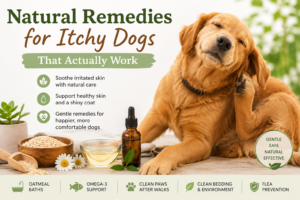 tchy skin is one of the most common problems dog owners notice. An occasional scratch is normal, but constant licking, chewing, rubbing, or scratching can leave your dog uncomfortable and may eventually lead to irritated skin or infection.
The good news is that several gentle home remedies may help soothe mild itching. The important thing is to remember that itching can have many causes—including allergies, fleas, dry skin, food sensitivities, or infections—so persistent symptoms should always be checked by a veterinarian.
1. Try a Soothing Oatmeal Bath
Plain oatmeal can be very soothing for dry or irritated skin.
You can grind plain, unflavoured oats into a fine powder and mix them into lukewarm bath water. Allow your dog to soak for about 10–15 minutes, gently working the oatmeal water through the coat.
Rinse gently and pat your dog dry.
Avoid using flavoured oatmeal or products containing sugar, artificial sweeteners, or added ingredients.
2. Keep Your Dog’s Skin Clean and Moisturized
Dry skin often makes itching worse. Regular bathing with a gentle, dog-specific moisturizing shampoo can help remove allergens, dirt, and irritants from the coat.
Avoid bathing your dog too frequently, however, because excessive washing can strip away the skin’s natural oils.
Your veterinarian or groomer can recommend a bathing schedule that works well for your dog’s coat and skin type.
3. Consider Omega-3 Fatty Acids
Omega-3 fatty acids are commonly used to support healthy skin and coats in dogs. They may also help reduce inflammation associated with certain skin conditions.
Fish-oil supplements designed specifically for dogs are available, but the proper amount depends on your dog’s size, diet, and health.
Always check with your veterinarian before adding supplements to your dog’s routine.
4. Check for Fleas
Sometimes the simplest explanation is the correct one.
Even a small number of flea bites can cause intense itching, especially in dogs that are allergic to flea saliva. Check around your dog’s tail, belly, neck, and behind the ears for fleas or small black specks known as flea dirt.
Keeping your dog on an appropriate veterinarian-recommended flea prevention program can make a huge difference.
5. Rinse Paws After Walks
Dogs with environmental allergies may react to grass, pollen, dust, or other outdoor allergens.
After walks, gently rinse or wipe your dog’s paws and lower legs with clean water or a pet-safe wipe. This simple habit can reduce the amount of pollen and other irritants your dog carries into the house.
It can be especially helpful during spring and summer allergy seasons.
6. Keep Bedding Clean
Your dog’s bed can collect dust, pollen, hair, and other allergens.
Wash blankets and removable bedding regularly using a mild, fragrance-free detergent. Vacuum areas where your dog spends a lot of time and keep sleeping areas clean and dry.
A cleaner environment can help reduce exposure to everyday irritants.
7. Avoid Human Skin Products
It can be tempting to reach for products you already have at home, but many human lotions, creams, essential oils, and medications are not appropriate for dogs.
Some ingredients can irritate your dog’s skin, while others can be harmful if your dog licks them.
Use products specifically formulated for pets unless your veterinarian recommends otherwise.
When Should You Visit the Vet?
Home remedies are best suited for occasional, mild itching.
Contact your veterinarian if your dog:
Scratches constantly
Develops red or inflamed skin
Has bald patches or excessive hair loss
Has sores, scabs, or bleeding
Develops a strong or unusual skin odor
Constantly licks or chews one area
Has swollen ears or frequent ear infections
Seems uncomfortable or restless
Does not improve after a few days
Persistent itching may be caused by allergies, parasites, bacterial infections, yeast infections, or other conditions that require treatment.
A Little Care Can Make a Big Difference
Healthy skin plays an important role in your dog’s overall comfort and wellbeing. Simple habits such as keeping bedding clean, rinsing paws, providing proper nutrition, maintaining flea prevention, and using gentle grooming products can help keep your dog’s skin healthy.
Natural remedies can provide relief for mild irritation, but they should never replace veterinary care when itching becomes persistent or severe.
Pay attention to changes in your dog’s skin and behaviour. Finding the cause of the itching is often the best way to help your dog feel comfortable, relaxed, and happy again.